What do Wolves in Yellowstone, on Wall Street, and the Ones Lurking in Your Shadow Have in Common?
Every generation before us has had to experience history. People who came of age in the first half of the 20th century lived through 2 world wars. Those in the second half lived through Vietnam and the real threat of nuclear holocaust. Those of us who have come of age in this century probably thought they were going to get away with relatively benign events such as stock market crashes and a relatively tame, at least by historical standards, pandemic.
They thought they were going to escape history! (Did anyone think to ask history about that?)
What’s changed?
Do some of today’s larger-than-life, brash leaders look different from how they did even a decade or two ago? How does that gel with what we have been led to believe, that leadership is all about being not just strong, but also noble and compassionate? Does it feel like that type of leadership is going out of style, replaced by something much harsher?
Given how prominent and powerful this style of leadership has become, I think it behooves us to analyze it as honestly and non-judgmentally as we can and see whether there are lessons to be learned.
How exactly would we describe this style of leadership? Why does it seem to be gaining ground? What is its emergence telling us about where we are at present?
Let us start with a couple of examples and then see if we can synthesize something from them.
The Wolves of Yellowstone
(PC: Doug Smith – NPS)
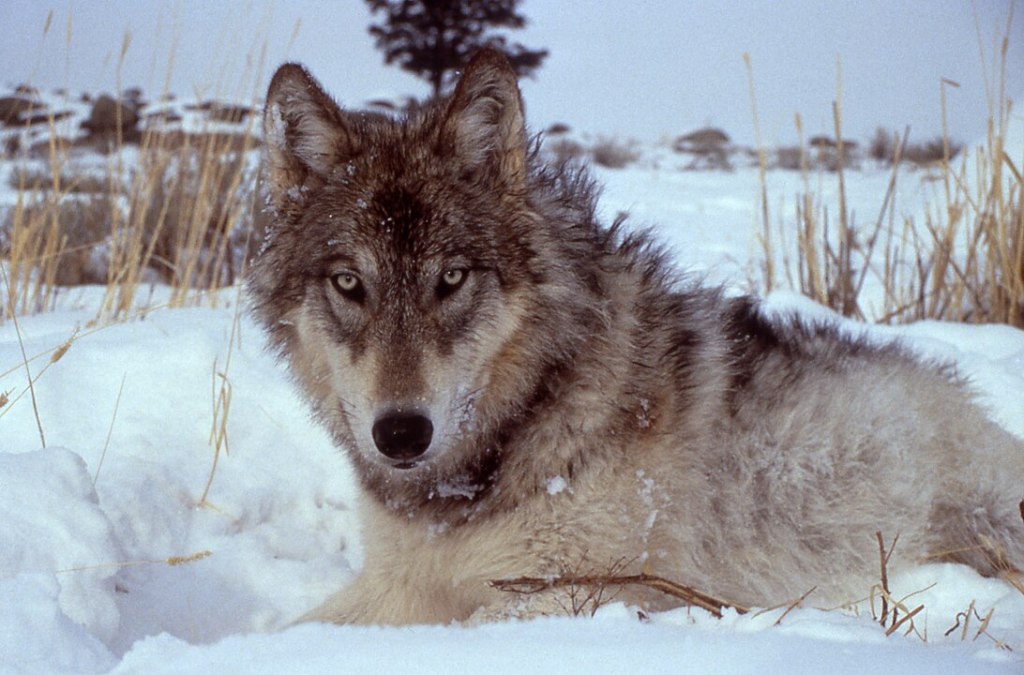
For centuries, the area in Wyoming that later on became the Yellowstone national park harbored a flourishing ecosystem, containing a native population of elks, beavers, eagles, badgers, and songbirds, among many other species. And yes, that included wolves.
When the national park was created in 1872, there were no provisions to protect wildlife. It was essentially a free for all for hunters to go and hunt any animal they wanted. In particular, wolves were a highly prized target, since they were considered to be just undesirable predators.
Fast forward to the mid-1920’s, and wolves were pretty much extinct in the area.
One would think that this must have been a wonderful time to be an elk, or any other prey animal, because they had no natural predators in the area.
But that’s not how nature works. Its true that without wolves, elks had a field day and their population went through the roof. But this, in turn, meant that their habitat got totally decimated due to overgrazing. Many other species that were dependent upon the vegetation were also adversely affected. Eventually even land erosion worsened. In general, conditions in the park declined drastically.
Finally, in 1995, after various experiments to manage the population of elks and other creatures failed to produce the desired results, it was thought prudent to revert to how things used to be, i.e., put nature back in control, by reintroducing wolves into the park.
And lo and behold, within a few years, this simple act led to a cascade of renewal in the park. The presence of wolves meant fewer elk, and with fewer elk, plants like willow, aspen, and cottonwood began to grow again, especially along riverbanks. The regrowth of vegetation stabilized the soil and rivers, creating new habitats for beavers, which in turn benefited fish and other animals. The changes led to an increase in the numbers of all the other species that used to call the area home.
In short, the reintroduction of wolves actually led to restoration and strengthening of the entire ecosystem.
The wolves not only provided a natural control mechanism on the population of elks, but also reawakened vigilance, adaptation, and movement among all the animals. This in turn helped vegetation to grow, soil erosion to stop, and the natural diversity and balance to be restored.
It’s one of nature’s deep and dark truths: some amount of predation is necessary to sustain the whole. Without wolves, Yellowstone grew passive, complacent and unhealthy; with them, it became alive and vigorous again.
I hope this gives you some idea of what I am trying to convey here. Sometimes, the doctor orders a bitter pill, and that’s exactly what the patient needs.
If you were managing Yellowstone at that time, what style of leadership would you say you were practicing? It’s certainly not the style where the leader plans everything, ensures all voices are heard, and no one is hurt.
Elks would have never voted to reintroduce wolves. The previous efforts to systematically control elk population weren’t delivering the results either.
Maybe this situation required a different style of leadership – what I am calling the “Wolf Leadership Style”, after the wolves of Yellowstone.
Naming it this way is already enlightening because you can immediately see connections with other situations involving wolves, and they seem to have a very good overlap with what we are trying to get at here. When that happens, it tells us that we may be on to something.
So let us next look at another example involving wolves, not the hairy kind but the clean shaven buttoned down kind, and see if they throw any new light on this phenomenon.
The Wolf of Wall Street

(PC: Red Granite Pictures)
Fast forward to 2013. We were still recovering from the Global Financial Crisis (GFC) of 2008, when irrational exuberance in the real estate market led to a severe crash on Wall Street, which spread globally. Many books have been written and movies produced about this pivotal moment in our lives.
But none other like the Wolf of Wall Street.
This beautifully directed and acted black comedy opened to very mixed reviews, and was very controversial due to its excessively irreverent (some would say nasty and in bad taste) depiction of the story of a stock broker’s rise and eventual fall in the aftermath of the GFC.
What’s interesting is that, in spite of all the controversy, the movie ended up becoming Martin Scorcese’s highest grossing work, and that alone is saying something. It eventually ranked in the top 20 in New York Times’ list of “The 100 Best Movies of the 21st Century”.
So, while many critics and initial viewers may have given it mixed reviews, the movie clearly struck a nerve with the people at large, making even the critics come around eventually.
The movie wasn’t about saving nature (far from it!), but it was about reawakening animal instincts and energy in people, particularly the people who were desperate to get out of their financial woes caused by the GFC. And this awakening was done by a certain human “avatar” of a wolf.
The wolf in this case was Jordan Belfort, the aforementioned stock trader. His character is played by Leonardo DiCaprio. The movie depicts how he starts humble, and quickly manages to climb to stratospheric heights in the world of finance.
During its heyday, his brokerage firm’s sales floor looks a lot like a jungle, full of wild, predatory creatures looking hungrily for their next prey. It is full of aggression and adrenaline, nastiness and cruelty.
Unfortunately, his business follows unscrupulous business practices and even indulges in corruption and fraud. He eventually gets caught, and this leads to his downfall.
But, in there, there is also a lesson in leadership.
Jordan is a fantastic speaker. In fact, some of the speeches from the movie, such as “There’s no nobility in poverty” and “I’m not leaving” are even used in actual leadership and motivational seminars. They are that good. He has a special way of tapping into his employees’ hunger, pain and self esteem. He empathizes with them by telling them about his own struggles. He builds confidence and loyalty by telling them things they have known for a log time but no one was willing to say out loud. He expresses the right emotions at the right time. He is charismatic and exudes a sense of invincibility.
But, as we stated earlier, their entire business is based on unscrupulous practices and the whole scheme eventually unravels. Which by itself reveals a different side of the same leadership style – its dark side to be precise.
In fact, while his speeches are the staple of motivational seminars, they are always accompanied by warnings. This style of leadership does bring out the animal spirits in the employees, motivating them into action and aggression, but one must acknowledge that it can be a double edged sword.
Which brings us to the next point I want to make.
Carl Jung’s Wolf

(PC: lonerwolf.com)
Carl Jung, the well known Swiss psychologist used the term “Shadow” to describe the darker, more primitive side of our nature, that we usually try to repress, or even deny. It includes our animal tendencies, such as aggression, ambition, ruthlessness, vanity, and hunger for power. He also uses the archetype of the wolf to describe this shadow.
One the one hand, these tendencies are extremely powerful. Many animals, including those close to us, can be seen to have them. They have evolved for very good reasons, having to do with every species’ struggle for survival.
Let’s face it – we ourselves lived in jungles and savannas, surrounded by wild animals, for a long long time. These tendencies are as much a part of us as those that we are proud to talk about.
As a result, in spite of our efforts to suppress or deny these tendencies, we don’t always succeed in doing so. They tend to leak out in various ways or corrupt our other tendencies.
But Jung felt that if we can find a way to tap into them, they can become extremely powerful allies that can drive us, and show us ways to succeed in difficult situations.
Jung called this process “Integrating the Shadow”. It involves acknowledging our inner wolf, not as an enemy, but as a source of creative and even moral energy. It’s particularly important for leaders to go through this integration process in order to reclaim their vitality without turning themselves into tyrants, and in leading their organizations to stay aggressive and dynamic without becoming toxic.
Here is one of Jung’s quotes in this regard:
“One does not become enlightened by imagining figures of light, but by making the darkness conscious.” — Jung
The leader who manages to successfully integrate their shadow is conscious of and in control of their darkness. They further help their organization do the same in the service of attaining their goals.
Integrating the Wolf
All these examples seem to be pointing to a real phenomenon that has always been present, but have generally been suppressed or even denied, just like Jung’s shadow.
Wolf-style leaders don’t avoid conflict. In fact, they engineer it. They know that growth lives at the edge of comfort, that systems thrive on tension and feedback loops. They reintroduce constructive tension and vital energy into organizations that may have grown too safe and stagnant. It is leadership that channels intensity and aggression to bring life back to such organizations. And through that, they create organizations that are more resilient and healthy.
Just like Yellowstone’s wolves, they keep things moving, they get rid of the fat, and over time, they restore diversity, balance and resilience.
Just like Wall Street’s wolves, they electrify their followers, turn them into loyal advocates, constantly pump them up by reminding them of what is really important in their lives and how nothing should stand between them and their goals.
And just like Jung’s wolf, they acknowledge the power, both constructive and destructive, of this drive. It is like a fire that can warm our bones but also burn our house down. One has to achieve the right balance and integration with their inner wolf, rather then suppressing or denying it.
This is definitely not a gentle leadership style. It’s demanding, hardcore, and sometimes even cruel. But it’s also deeply human and sometimes is exactly the bitter medicine that an organization, or even a society needs.
Wolves in Real Life
(PC: Paul Noth at the NewYorker)
It goes without saying that there are a few well-known wolf-style leaders roaming the world today, in the industry as well as in politics.
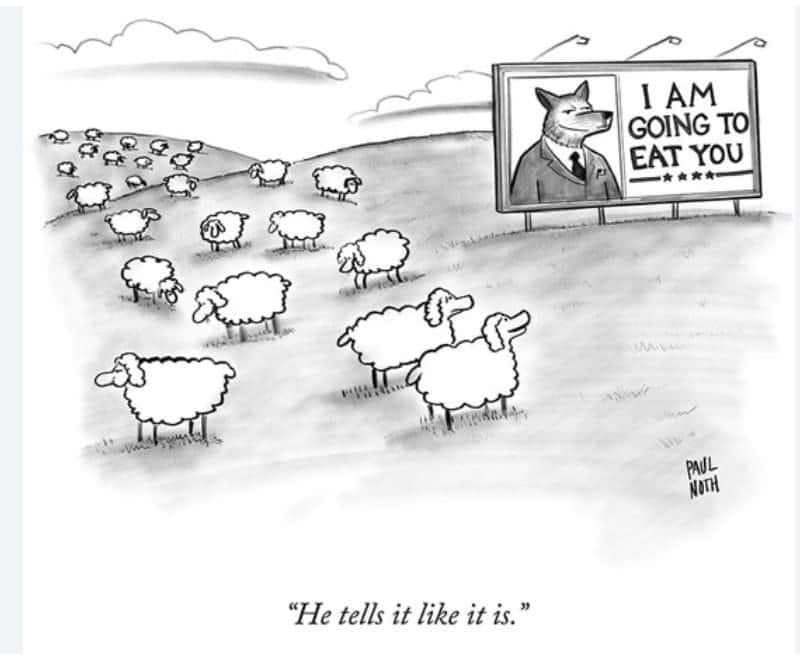
From time to time, they do some very disruptive or divisive things. Sometimes, they are even cruel or heartless. Phrases and memes like “FAFO” or “Move fast and break things” or “He tells it like it is”, which were initially meant to be tongue-in-cheek or even derogatory, have become mainstream. Leaders are openly risking their own and their organizations’ reputations and taking bold decisions that used to be possible only for small organizations earlier.
No leadership or management book probably suggests such strategies. Also, as we said earlier, elks or sheep would never desire to live under such a leader.
But, somewhere deep down, where their own shadow lives, they may suspect that that’s exactly what may be needed sometimes. And the shadow finds a way to express itself.
If you allow yourself to analyze their opinions or actions from an unbiased and generous perspective, one might just see some logic behind their thinking. You may not agree with it, but you can at least see why they might be thinking that way.
Their logic is pretty clear: Sometimes what a system needs is a deliberate reintroduction of tension in order for it to cure itself of the complacency or lethargy that may have permeated into it from too much comfort. Sometimes people need to be motivated by appealing to their more basal instincts. And if that can be done skillfully, and channeled in the right way, it can lead to better times in the long run, albeit after suffering through a period of pain.
One of the memes that has become quite popular captures this sentiment quite well (slightly paraphrased):
Hard times create strong leaders,
Strong leaders create good times,
Good times create weak leaders,
Weak leaders create hard times.
Depending upon where you think an organization (or even a society) is, you may accept that sometimes, the only way to heal such a system is to let the wolf back in. And if such a thing is already happening, it makes sense for us to at least try to understand this phenomenon and channel it in the right direction so we can control where and how far the wolf goes.
Let us hope we can understand, integrate and direct the wolves lurking inside ourselves as well as in the world.
 Deepest Turtle
Leave a comment